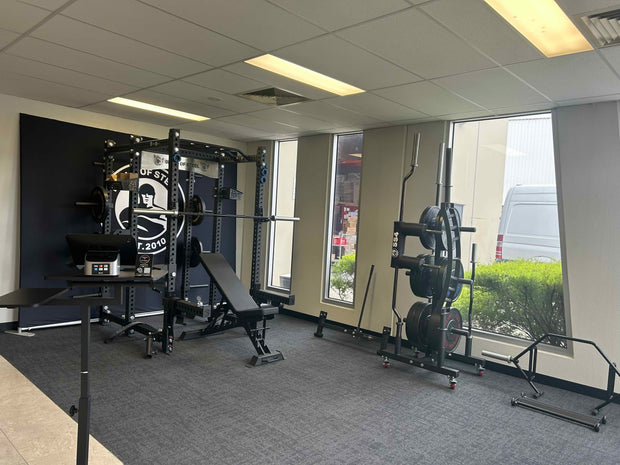
There's a universal truth in home gym ownership: the equipment multiplies faster than the floor space. One day it's a power rack and a barbell. Six months later, there are dumbbells stacked in the corner, kettlebells lined up along the wall, and bumper plates stacked wherever they happen to land. Sound familiar?
The fix isn't a bigger room. More often than not, the answer is smarter use of the space that's already there, specifically the vertical real estate around the rack that most people ignore.
Rack-mounted Storage Shelves are built around that idea.
Instead of adding more floor-standing furniture to an already crowded gym, these shelves bolt directly onto the rack and turn dead vertical space into organized, accessible storage for plates, dumbbells, kettlebells, medicine balls, and all the smaller stuff that tends to disappear.
Two Shelf Styles Built for Real Equipment
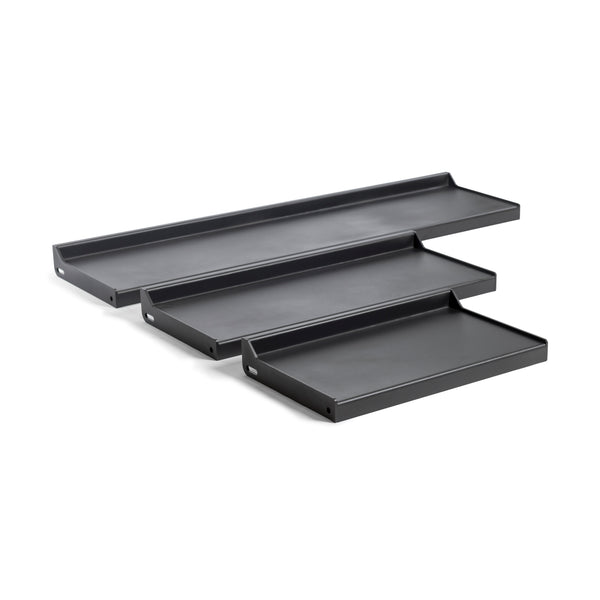
The shelves come in two distinct designs, each shaped around the kind of gear being stored:
Designed for plates, medicine balls, and sandbags. Includes a fully customizable divider system so the layout works for your collection, not a generic one.
Purpose-built for dumbbells and kettlebells, with a tilt/straight orientation feature. Also works as general-purpose shelving for accessories and smaller gear.
Both styles come in three lengths, so there's a size that matches the rack width and the layout of the gym without awkward overhangs or wasted span.
More Mounting Options Than Before
The newest version of these shelves added something worth paying attention to: single-post mounting support. Earlier models were primarily two-post setups. Now the shelves can mount onto a single upright, including configurations that attach to the back post of a power rack.
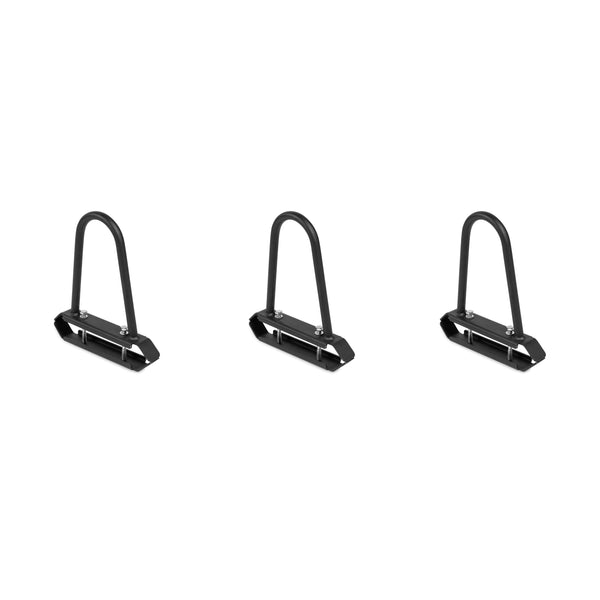
Each shelf is sold individually and comes with four 5/8-inch hardware bolts. Depending on the mounting configuration chosen, not all four are always needed, but they're included either way. The keyhole design also makes it possible to mount onto the side of a Manticore rack, even though Hydra-compatible bolt holes are already built in.
The Divider System: Actually Flexible This Time
Most shelves with dividers use a slotted system, which sounds flexible until realizing that "flexible" means choosing between six predetermined positions. The bumper plate shelf from Bells of Steel takes a different approach: the dividers slide into place anywhere along the shelf, with no fixed slots limiting placement.
Why this matters: If the plate collection includes odd sizes or mismatched sets, a fully adjustable divider system means building around what's actually in the gym, not rearranging the gym to fit the shelf.
Tilt or Straight: The Dumbbell Shelf's Hidden Feature
The dumbbell and kettlebell shelf has a practical feature that doesn't get talked about enough: a built-in slot that lets users switch between two orientations.
Set the shelf flat, and it becomes clean, open storage for water bottles, bands, chalk, phones, and anything else that needs a home near the rack. Tilt the shelf forward, and it's optimized for dumbbell retrieval. The lip holds the dumbbells in place while still making it easy to grab and return them mid-set without fumbling.
In short, one shelf that functions two different ways depending on what needs to be stored. That's worth something.
How to Mount the Shelves (Three Common Setups)
1. Between the Uprights
Mounting between the rack uprights is the most popular setup because it adds the most storage in one shot. The caveat: on a four-post rack, a shelf installed between the uprights takes up roughly seven inches of usable rack depth. That can get awkward for squats if the lifter is working inside the rack.
A practical workaround: use spotter arms and lift from the front of the rack instead of inside it. On a six-post rack or half rack where lifting happens on the outside, the interior becomes dedicated storage territory and the trade-off disappears entirely.
2. Outside the Rack
The Storage Shelves can also mount off the front or side of the rack, creating accessible storage for accessories without touching the interior setup. This works especially well for the small-but-important stuff: bands, chalk, straps, remotes, and whatever else ends up scattered around the gym.
On a Manticore setup specifically, side mounting is typically the better choice since the front geometry doesn't support it as cleanly.
3. Flat With the Lip Facing Back
Positioning the shelf flat with the lip at the rear creates open, easy access from the front. This layout is especially handy for kettlebells and heavier accessories that need a clean grab angle without fighting the shelf's edge on every pull.
Single Upright vs. Dual Upright: Which One to Choose
Stability and versatility pull in different directions here, and the right choice depends on the gym setup.
Dual Upright
Dual upright configurations handle more weight and can be mounted higher, up to 90-inch uprights. For gyms with heavy plates stored at height or high-traffic commercial environments, this is the more reliable choice.
Single Upright
A single upright setup uses fewer parts and often fits more easily into tighter spaces. The trade-off is some wobble, especially at height. Keep the recommended cap of 60-inch uprights in mind for single-post setups.
One natural stabilizer: heavier loads low on the shelf create more stability than light loads positioned high up.
Bottom line: Single upright setups work great in most home gyms and garages. If the gym sees heavy daily traffic or has people bumping into equipment regularly, dual uprights are worth the extra hardware.
How to Think About Shelf Spacing and Load Distribution
Simple Organizing Strategy
- Bottom shelf: Heaviest items like bumper plates and weight plates
- Middle shelf: Dumbbells and kettlebells for easy mid-workout access
- Top shelf: Medicine balls, accessories, and anything lightweight
A spacing of three between shelves gives enough clearance to load plates comfortably without cramming, while keeping the overall footprint manageable. The front foot extenders that come with the system also double as added stability and, depending on the rack setup, can provide extra barbell storage as a bonus.
Are These Shelves Better Than Other Storage Options?
Dedicated dumbbell racks or standalone plate trees have their place, but rack-mounted shelves have a specific advantage: they fit into the gym without adding new footprints to an already busy floor.
For gyms running Hydra or Manticore uprights, the shelves are designed to look and feel like part of the system.
Final Thoughts
A cleaner gym isn't just easier on the eyes. It removes the low-level friction that makes skipping a workout just a little too easy.
When equipment has a place, and that place is within arm's reach of the rack, showing up and getting to work stops being an obstacle course and starts being a habit.
Storage Shelves are one of the easiest and fastest upgrades a home gym can get. Pick the shelf style that matches the equipment, choose the mounting configuration that fits the rack layout, and let the storage do the heavy lifting.