If knee pain makes you wince at the thought of leg day, you’re not alone. Many lifters wonder whether machine-based squats, especially pendulum squats, are easier on the knees or just another way to feel like your joints are protesting. Let’s tackle that head-on: Is the pendulum squat hard on knees? Short answer: Not necessarily, and with the right approach, it can be knee-friendly. But it’s not magic, and proper form, progression, and individual anatomy all matter.
Below is a comprehensive look at how pendulum squats load the knees, who might benefit most (or least), proper technique, and how to decide if it belongs in your home gym.
What Is a Pendulum Squat?
A pendulum squat is a machine-based squat variation where the weight travels along a controlled, curved path. This guided motion helps stabilize the movement and allows you to focus on leg muscles without balancing a free barbell.
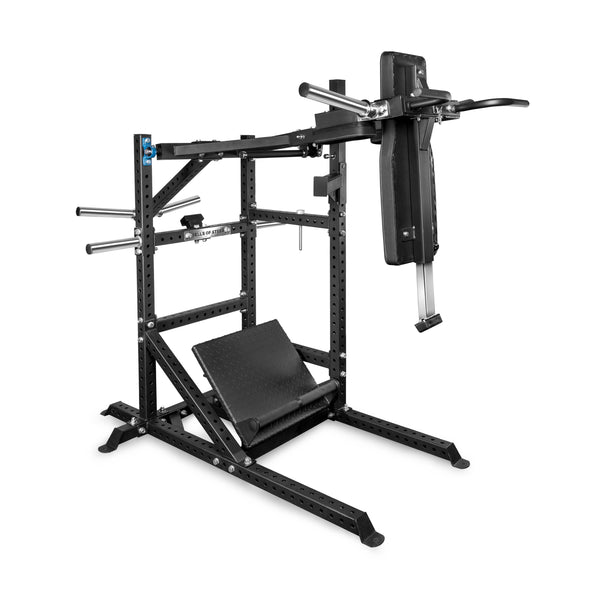
A great example is the Bells of Steel Pandemonium Squat, a robust multi-purpose machine that lets you perform pendulum squats, calf presses, and even overhead presses in a compact home gym footprint. The idea is that the machine’s guided path keeps your form consistent and reduces the guesswork that can aggravate joints.
How Pendulum Squats Load the Knees
All squat variations involve knee flexion and extension, that’s just physics. But how much stress is placed on the knee joint depends on:
-
Range of motion
-
Foot placement
-
Tension vector (where the weight is relative to your body)
-
Your anatomy and mobility
In a pendulum squat, the machine helps control your range of motion so you can hit depth without worrying about balance. This can reduce abnormal shear forces (sliding stress) on the knee if performed correctly. However, a few key caveats exist:
-
Pendulum squats still bend the knees deeply — and deep bends inherently create compression on knee cartilage.
-
If you’re trying to squat below parallel without adequate hip, ankle, or patellar mobility, you might feel more stress.
-
Locking out aggressively at the top or letting your knees cave inward can also cause discomfort.
The good news? Machines like the Pandemonium Squat allow you to control these elements more easily than free weights, making it easier to train without pain — when you use good technique.
Is Pendulum Squat Hard on Knees?
For most people with healthy knees: No, pendulum squats can actually be easier on the knees compared to traditional barbell squats.
-
The guided path reduces balance demands.
-
You can maintain more upright torso positions.
-
The machine can help you avoid forward knee drift, which is a common culprit in knee discomfort.
For people with knee issues: Possibly beneficial, but with conditions.
If you have a history of prior knee injuries (e.g., ACL tears, meniscus surgery, chronic tendinopathy, arthritis), always talk to your doctor or physical therapist first before loading any squat variation. Pendulum squats can reduce certain stressors on the knee, but improper use or underlying instability can still cause irritation.
Tips to Make Pendulum Squats Knee-Friendly
Focus on Foot Position
-
Place feet slightly wider with toes pointed slightly outward if it feels comfortable.
-
Drive through heels rather than toes to take stress off patellar tracking.
Limit Excessive Range of Motion
You don’t need to go as deep as possible every set. Slightly above parallel can still give you solid muscle activation without aggressive knee compression.
Engage Glutes and Hamstrings
Bracing these muscles shifts some load away from pure knee extension into hip extension, which knees love.
Watch Knee Track
Knees should track over your toes, not inward or dramatically forward of them. This helps protect ligaments and reduce shear stress.
Use Controlled Tempo
Slowly lower into the bottom of the squat and push up with control. Bouncing in and out of the hole increases load on the joint structures.
Is Pendulum Squat Good for People With Knee Pain?
Yes, when used correctly. For lifters with mild knee pain or mobility limitations, pendulum squats can be a gentler alternative to barbell squats because:
-
They minimize balance demands.
-
You can stop at a pain-free depth.
-
They encourage consistent technique.
However, if you have severe structural damage, inflammatory conditions (like active arthritis flare-ups), or unstable knees, start with lighter mobility work first and consult a professional.
Other Exercises That Support Knee Health
Pendulum squats are one piece of the puzzle. Consider adding:
-
Hamstring-dominant lifts (e.g., RDLs, glute bridges)
-
Step-ups and split squats (controlled, single-leg work)
-
Light banded knee tracking drills
-
Terminal knee extensions (low-load, high quality)
FAQ: Pendulum Squat and Knee Health
Is a pendulum squat better for knees than a barbell squat?
Often, yes, especially if you struggle with balance, mobility, or low back fatigue. The guided movement helps reduce unwanted shear forces on the knee.
Can pendulum squats cause knee pain?
If performed with poor form, excessive depth, or too much weight, yes. Pain is your body’s way of saying “Check your technique, depth, or load.”
How should my knees track in a pendulum squat?
They should track outward in line with your toes, without caving inward. Avoid letting them shoot dramatically forward past your toes.
Should people with knee injuries avoid pendulum squats?
Not necessarily, but anyone with a history of knee issues should consult a doctor or physiotherapist first. Pendulum squats can be part of a knee-friendly program when combined with proper mobility and strength work.
What’s a good alternative if pendulum squats still hurt?
Try box squats, split squats, or reverse lunges with a limited range of motion to build strength without excessive knee stress.
Actionable Conclusion: Train Smart, Not Just Hard
So, is the pendulum squat hard on knees? The honest answer: it can be, but it doesn’t have to be. In fact, for many lifters, pendulum squats are less stressful on the knees than traditional squats because of the controlled movement path and reduced demand on stabilizers.
The key is technique and awareness. Keep your knees tracking over your toes, drive through your heels, and stop at a pain-free depth. If you have a knee injury history, check with your healthcare provider before loading heavy.
Pendulum squats — especially on a machine like the Bells of Steel Pandemonium Squat — can be a knee-friendly tool to build lower body strength while minimizing discomfort. Pair them with glute and hamstring work, controlled tempo, and a smart progression plan, and you’ll be crushing leg days without the joint protest.